






No products in the cart.
View wishlist“Buddha Necklaces” has been added to your wishlist
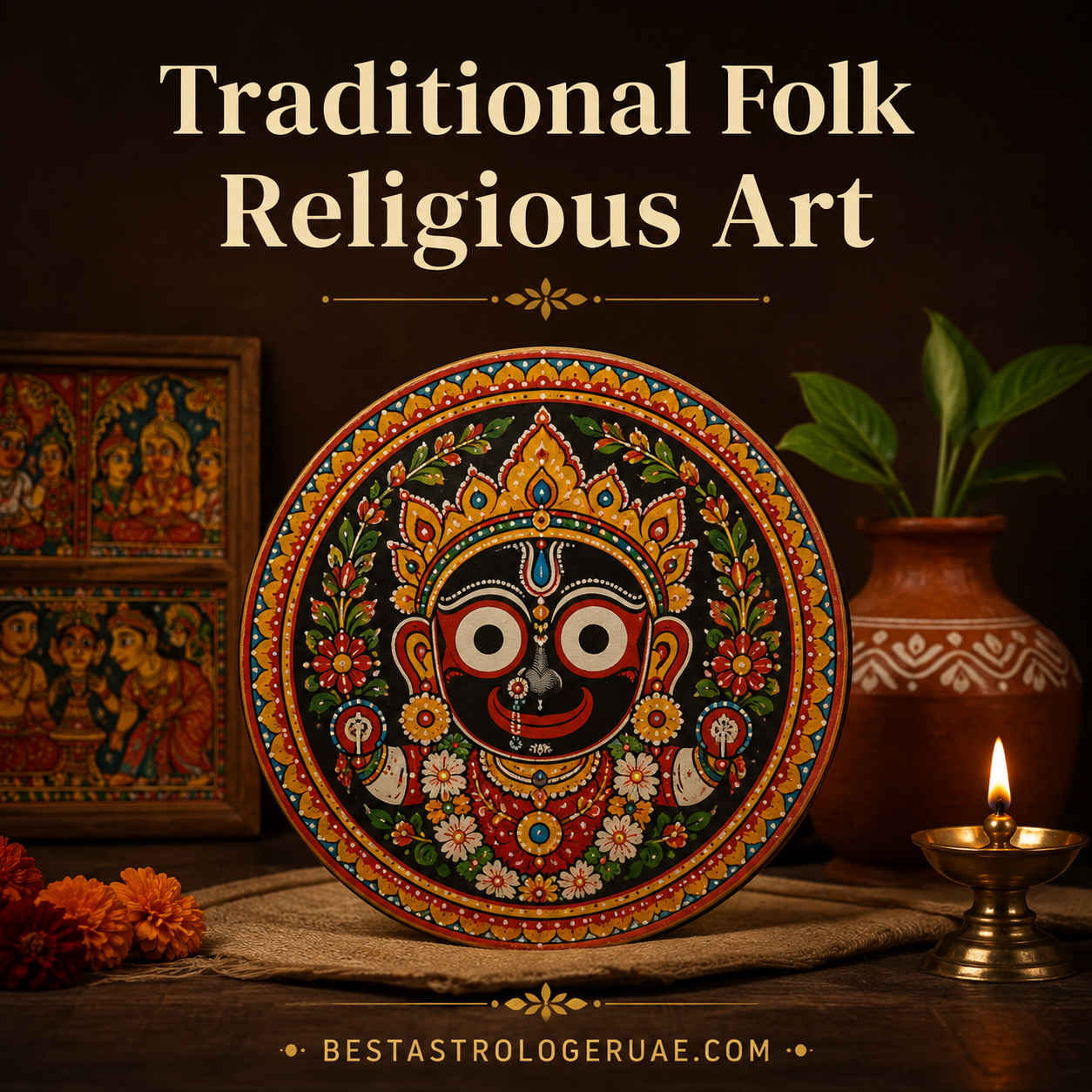
Traditional Folk Religious Art
Traditional Folk Religious Art is more than a visual expression—it is a living heritage that connects spirituality, culture, history, and craftsmanship. Every handcrafted piece carries generations of wisdom, devotion, and artistic excellence. By appreciating, preserving, and supporting these traditions, we ensure that the stories, beliefs, and values embedded within these artworks continue to inspire people across the world.
Categories Deity-Specific Products, Divine Market Tags ancient religious paintings, astrology UAE, best astrologer uae, cultural heritage, cultural traditions, folk artists, folk painting, handmade religious art, heritage artwork, horoscope consultation, religious folk art, Religious Wall Art, sacred art, sacred paintings, spiritual art, spiritual guidance, temple art, traditional culture, traditional folk religious art, vastu expert
Share on facebook
Facebook
Share on twitter
X
Share on pinterest
Pinterest
Share on whatsapp
WhatsApp
Traditional Folk Religious Art – A Timeless Expression of Faith, Culture, and Heritage
Traditional Folk Religious Art represents the spiritual identity, cultural wisdom, and artistic creativity of civilizations that have preserved their beliefs through visual storytelling for centuries. Unlike modern decorative artwork, religious folk art carries deep symbolism, sacred meanings, and historical importance. Every brushstroke, carved figure, embroidered fabric, or handcrafted sculpture reflects devotion, faith, and the collective memory of a community.
Across the world, religious traditions have inspired extraordinary forms of folk art that continue to influence modern artists, historians, collectors, and spiritual seekers. These artistic traditions not only beautify temples, homes, and sacred places but also educate future generations about mythology, ethics, rituals, and cultural values.
Whether displayed in homes, museums, churches, temples, mosques, monasteries, or cultural festivals, Traditional Folk Religious Art remains one of humanity’s greatest treasures.
What is Traditional Folk Religious Art?
Traditional Folk Religious Art refers to handcrafted artistic creations inspired by religious beliefs, spiritual practices, local customs, and cultural traditions. Unlike commercial artwork, folk religious art is deeply rooted in community values and is often created by local artisans using techniques passed down through generations.
This art form includes:
- Sacred paintings
- Wall murals
- Temple carvings
- Religious sculptures
- Iconography
- Handmade textiles
- Folk masks
- Decorative pottery
- Wooden carvings
- Ritual objects
- Embroidery
- Metal crafts
Each artwork reflects the beliefs, rituals, and stories unique to a particular culture or religion.
Historical Origins of Religious Folk Art
Religious folk art dates back thousands of years. Ancient civilizations used art to communicate stories before written language became widespread.
Early examples include:
- Cave paintings representing spiritual rituals
- Ancient Egyptian religious carvings
- Hindu temple sculptures
- Buddhist murals
- Christian icons
- Islamic geometric patterns
- Indigenous tribal paintings
- African ceremonial masks
- Native American spiritual symbols
These artistic traditions evolved with changing cultures while preserving their original spiritual significance.
Why Traditional Religious Art Matters
Traditional Folk Religious Art is much more than decoration. It serves several important purposes:
Preserves Cultural Heritage
Every artwork tells stories about ancestors, beliefs, customs, and traditions.
Strengthens Spiritual Connection
Sacred artwork creates peaceful environments for prayer, meditation, and reflection.
Educates Future Generations
Religious art teaches mythology, history, festivals, and moral values.
Supports Local Artisans
Many traditional artists continue ancient family techniques that deserve recognition and preservation.
Celebrates Community Identity
Folk religious art reflects the unique identity of villages, regions, and ethnic groups.
Common Themes in Traditional Folk Religious Art
Many recurring themes appear across different cultures.
Divine Figures
Artists portray gods, goddesses, saints, prophets, angels, and spiritual leaders with symbolic colors and attributes.
Sacred Animals
Animals often represent divine qualities:
- Elephant – Wisdom
- Cow – Compassion
- Peacock – Beauty
- Lion – Courage
- Eagle – Strength
- Dove – Peace
- Fish – Prosperity
Nature
Trees, rivers, mountains, flowers, and the sun symbolize life, purity, and divine creation.
Festivals
Many folk paintings celebrate religious festivals with vibrant colors and joyful scenes.
Sacred Geometry
Circles, lotus flowers, mandalas, stars, and geometric patterns symbolize harmony and universal balance.
Different Forms of Traditional Religious Folk Art
Folk Paintings
Handmade paintings often illustrate sacred stories, rituals, legends, and spiritual teachings.
Temple Murals
Large wall paintings preserve religious history inside sacred buildings.
Wood Carving
Artisans carve wooden statues, doors, altars, and decorative panels with intricate religious motifs.
Stone Sculptures
Ancient stone sculptures remain among the world’s greatest artistic achievements.
Textile Art
Embroidery, woven fabrics, and ceremonial clothing often feature sacred symbols.
Pottery
Decorated clay vessels are used during festivals and religious ceremonies.
Metal Craft
Bronze, copper, silver, and brass are transformed into lamps, idols, ritual bells, and ceremonial objects.
Symbolism Behind Traditional Religious Art
Every color, shape, and figure has meaning.
Red
Represents energy, courage, devotion, and celebration.
White
Symbolizes peace, purity, and spiritual awakening.
Yellow
Associated with wisdom, knowledge, and enlightenment.
Blue
Represents infinity, divine power, and truth.
Green
Symbolizes nature, growth, healing, and prosperity.
Gold
Represents divinity, wealth, and sacred light.
Traditional Folk Religious Art Around the World
Different cultures have developed unique artistic styles.
India
Known for temple paintings, Madhubani, Pattachitra, Kalamkari, Tanjore paintings, and tribal art inspired by Hindu mythology.
Nepal
Features intricate Buddhist mandalas and sacred Thangka paintings.
Tibet
Famous for colorful spiritual paintings used in meditation.
Europe
Christian icons, stained glass, illuminated manuscripts, and wooden churches showcase centuries of craftsmanship.
Middle East
Islamic calligraphy, arabesque designs, and geometric architecture represent spiritual beauty without figurative imagery.
Africa
Religious masks, carved statues, and ceremonial artifacts preserve tribal traditions.
Latin America
Catholic folk art combines indigenous culture with Christian symbolism.
Modern Influence of Traditional Religious Art
Even today, traditional religious art inspires:
- Interior decoration
- Architecture
- Fashion
- Graphic design
- Museum collections
- Cultural exhibitions
- Educational institutions
- Digital illustrations
- Home décor
- Spiritual retreats
Modern artists continue adapting ancient techniques while respecting traditional values.
How Traditional Religious Art Preserves Identity
In a rapidly changing world, traditional religious art protects cultural identity by preserving:
- Ancient stories
- Sacred rituals
- Local craftsmanship
- Indigenous knowledge
- Community history
- Spiritual values
Without these artistic traditions, many cultural histories could disappear.
Caring for Traditional Folk Religious Art
Collectors and families should protect these valuable artworks by:
- Keeping them away from direct sunlight
- Maintaining proper humidity
- Using gentle cleaning methods
- Avoiding harsh chemicals
- Displaying artworks in stable environments
- Consulting restoration experts when necessary
Proper preservation ensures future generations can appreciate these masterpieces.
Why Collectors Value Religious Folk Art
Collectors appreciate Traditional Folk Religious Art because it offers:
- Historical authenticity
- Cultural significance
- Handmade craftsmanship
- Rare artistic styles
- Investment value
- Spiritual inspiration
- Educational importance
Authentic handmade pieces become increasingly valuable over time.
The Future of Traditional Folk Religious Art
As interest in heritage preservation grows worldwide, traditional religious art continues to gain recognition through museums, cultural festivals, educational programs, online exhibitions, and artisan communities. Digital platforms now allow traditional artists to reach global audiences while preserving centuries-old craftsmanship.
Supporting traditional artisans helps keep these beautiful artistic traditions alive for future generations.
Conclusion
Traditional Folk Religious Art is more than a visual expression—it is a living heritage that connects spirituality, culture, history, and craftsmanship. Every handcrafted piece carries generations of wisdom, devotion, and artistic excellence. By appreciating, preserving, and supporting these traditions, we ensure that the stories, beliefs, and values embedded within these artworks continue to inspire people across the world.
Contact Information
Phone: +971 50 751 1883
Email: contact@bestastrologeruae.com
Location: UAE
#TraditionalFolkArt #ReligiousArt #SacredArt #CulturalHeritage #SpiritualArt #FolkPainting #TraditionalCulture #ReligiousPainting #AncientArt #HandmadeArt #TempleArt #FolkHeritage #CulturalArt #ReligiousCulture #HeritageArt
Ratings
0.0
0 Product Ratings
5
0
4
0
3
0
2
0
1
0
Review this product
Share your thoughts with other customers
Write a review
Be the first to review “Traditional Folk Religious Art” Cancel reply
Related Products





BestAstrologerUAE.com is a trusted platform offering authentic Vedic astrology and Kerala Prashnam guidance for people living in the UAE and worldwide.
Quick Links
Our Services
State List UAE
- Best Astrologer in Riyadh
- Best Astrologer in Jeddah
- Best Astrologer in Dammam
- Best Astrologer in Mecca
- Best Astrologer in Medina
- Best Astrologer in Muscat
- Best Astrologer in Salalah
- Best Astrologer in Sohar
- Best Astrologer in Doha
- Best Astrologer in Kuwait City
- Best Astrologer in Hawalli
- Best Astrologer in Manama
- Best Astrologer in Riffa
- Best Astrologer in Washington DC
- Best Astrologer in San Francisco
- Best Astrologer in New York
- Best Astrologer in Los Angeles
- Best Astrologer in Dallas
- Best Astrologer in Chicago
- Best Astrologer in Houston
- Best Astrologer in Miami
© 2026 BestAstrologerUAE.com. All rights reserved. Designed by Chahar Technologies
- Home
- About Us
- Talk To Astrologer
- Astrology
- Numerology
- Gemology
- Vastu
- Our Services
- Pooja Booking
- Blog
- Astrology News
- Astrology News & Planetary Updates
- Client Success Stories & Testimonials
- Daily Horoscope Updates
- Daily Panchang
- Dosha Nivaran & Pariharam Guides
- Festival-Specific Predictions & Rituals
- Gem jewellery
- Gemstone Recommendations & Uses
- UAE Best Temples
- Live Pooja & Homam Videos
- Live Q&A with K. Namboothiri
- UAE Best Temples
- Marriage & Matchmaking Advice
- Numerology Insights
- Planetary Transit Effects (Gocharam)
- Remedies
- Remedies & Solutions for Common Problems
- Spiritual Talk Series with K. Namboothiri
- Tantra & Mantra Wisdom
- Today’s Panchangam & Muhurtham Times
- Vastu Tips for Home & Office
- Vedic Homam & Pujas Explained
- VIP Horoscope Analysis (Premium Cases)
- Weekly & Monthly Astrology Forecasts
- World Famous Temples
- Yogams
- Video Gallery
- Planetary Transit Effects (Gocharam)
- Our Astrologer Panel
- Yoga Master
- Ayurvedic Panel
- Spiritual Talents
- Remedies & Solutions for Common Problems
- Spiritual Talk Series with K. Namboothiri
- Tantra & Mantra Wisdom
- Today’s Panchangam & Muhurtham Times
- Vastu Tips for Home & Office
- Vedic Homam & Pujas Explained
- Vedic News & Global Astro Trends
- VIP Horoscope Analysis (Premium Cases)
- Remedies
- Career & Job Issues
- Love & Relationship Problems
- Mental Stress & Depression
- Planetary Dosh (Navagraha Shanti)
- Spiritual Growth & Peace
- Vastu Dosh (Home Energy Imbalance)
- Financial Problems
- Evil Eye, Black Magic & Negativity
- Business & Trade Issues
- Delay in Marriage
- Foreign Travel & Education Issues
- Children & Fertility Problems
- Family Disputes & Domestic Harmony
- Health & Chronic Disease
- Legal Problems & Enemies
- Yearly Remedies / General Good Luck
- Divine Market
- Astrology & Horoscope Services
- Pooja & Ritual Services
- Yantras & Spiritual Tools
- Spiritual Jewelry
- Religious Books & Guides
- Pooja Essentials
- Temple Prasad & Offerings
- Home Temple & Decor
- Remedies & Healing Products
- Meditation & Wellness
- Spiritual Gifts & Hampers
- Virtual Spiritual Services
- Deity-Specific Products
- Tantra & Protection Products
- Sacred Food & Offerings
- Devotional Art & Collectibles
- Astrologer & Priest Consultations
- Festival & Ritual Kits
- Mantra Chanting Tools
- Global Divine Exports
- Gem Jewellery
- Navaratna Gemstones
- Precious gemstones
- Semi Precious Gemstones
- Crystal jewelry
- Astrological Gemstones
- Traditional Indian Jewelry Gold
- Gemstone Jewelry
- Gold Jewelry
- Silver Jewelry
- Spiritual Jewelry
- Men’s Jewelry
- Women’s Jewelry
- Kids & Newborn Jewelry
- Custom & Personalized Jewelry
- Healing & Wellness Jewelry
- Festival & Ritual Jewelry
- Occult & Tantric Jewelry
- Religious & Temple Jewelry
- Zodiac & Birthstone Jewelry
- Minimalist & Daily Wear Jewelry
- Fusion & Fashion Jewelry
- Wedding & Engagement Jewelry
- Anniversary & Gift Jewelry
- Luxury & Collectible Jewelry
- Amulets
- Protection Amulets
- Planetary Amulets (Navagraha)
- Deity Amulets
- Tantric & Occult Amulets
- Rudraksha-Based Amulets
- Yantra Amulets
- Healing & Wellness Amulets
- Wealth & Success Amulets
- Love & Relationship Amulets
- Custom & Personalized Amulets
- Kerala Mantric Amulets
- Nepalese Amulets
- Cultural & Regional Amulets
- Tibetan Amulets
- Thailand Amulets
- Chinese Amulets
- Children & Infant Amulets
- Buddhist Amulets
- Video
- Daily Horoscope Updates
- Weekly & Monthly Astrology Forecasts
- Live Q&A with K. Namboothiri
- Our Astrologer Panel
- Ayurvedic Doctor
- Yoga Master
- Spiritual Talents
- Remedies & Solutions for Common Problems
- Vastu Tips for Home & Office
- Numerology Insights
- Marriage & Matchmaking Advice
- Festival-Specific Predictions & Rituals
- Client Success Stories & Testimonials
- Planetary Transit Effects (Gocharam)
- Spiritual Talk Series with K. Namboothiri
- Gemstone Recommendations & Uses
- Dosha Nivaran & Pariharam Guides
- Live Pooja & Homam Videos
- Tantra & Mantra Wisdom
- World Famous Temples
- Vedic Homam & Pujas Explained
- VIP Horoscope Analysis (Premium Cases)
- Astrology News & Planetary Updates
- Vedic News & Global Astro Trends
- Today’s Panchangam & Muhurtham Times
- Vishnumaya Worship in UAE
- Stock Market Astrology
- Our Astrologer Panel
- Contact Us
Shopping Cart0
- Home
- About Us
- Talk To Astrologer
- Astrology
- Numerology
- Gemology
- Vastu
- Our Services
- Pooja Booking
- Blog
- Astrology News
- Astrology News & Planetary Updates
- Client Success Stories & Testimonials
- Daily Horoscope Updates
- Daily Panchang
- Dosha Nivaran & Pariharam Guides
- Festival-Specific Predictions & Rituals
- Gem jewellery
- Gemstone Recommendations & Uses
- UAE Best Temples
- Live Pooja & Homam Videos
- Live Q&A with K. Namboothiri
- UAE Best Temples
- Marriage & Matchmaking Advice
- Numerology Insights
- Planetary Transit Effects (Gocharam)
- Remedies
- Remedies & Solutions for Common Problems
- Spiritual Talk Series with K. Namboothiri
- Tantra & Mantra Wisdom
- Today’s Panchangam & Muhurtham Times
- Vastu Tips for Home & Office
- Vedic Homam & Pujas Explained
- VIP Horoscope Analysis (Premium Cases)
- Weekly & Monthly Astrology Forecasts
- World Famous Temples
- Yogams
- Video Gallery
- Planetary Transit Effects (Gocharam)
- Our Astrologer Panel
- Yoga Master
- Ayurvedic Panel
- Spiritual Talents
- Remedies & Solutions for Common Problems
- Spiritual Talk Series with K. Namboothiri
- Tantra & Mantra Wisdom
- Today’s Panchangam & Muhurtham Times
- Vastu Tips for Home & Office
- Vedic Homam & Pujas Explained
- Vedic News & Global Astro Trends
- VIP Horoscope Analysis (Premium Cases)
- Remedies
- Career & Job Issues
- Love & Relationship Problems
- Mental Stress & Depression
- Planetary Dosh (Navagraha Shanti)
- Spiritual Growth & Peace
- Vastu Dosh (Home Energy Imbalance)
- Financial Problems
- Evil Eye, Black Magic & Negativity
- Business & Trade Issues
- Delay in Marriage
- Foreign Travel & Education Issues
- Children & Fertility Problems
- Family Disputes & Domestic Harmony
- Health & Chronic Disease
- Legal Problems & Enemies
- Yearly Remedies / General Good Luck
- Divine Market
- Astrology & Horoscope Services
- Pooja & Ritual Services
- Yantras & Spiritual Tools
- Spiritual Jewelry
- Religious Books & Guides
- Pooja Essentials
- Temple Prasad & Offerings
- Home Temple & Decor
- Remedies & Healing Products
- Meditation & Wellness
- Spiritual Gifts & Hampers
- Virtual Spiritual Services
- Deity-Specific Products
- Tantra & Protection Products
- Sacred Food & Offerings
- Devotional Art & Collectibles
- Astrologer & Priest Consultations
- Festival & Ritual Kits
- Mantra Chanting Tools
- Global Divine Exports
- Gem Jewellery
- Navaratna Gemstones
- Precious gemstones
- Semi Precious Gemstones
- Crystal jewelry
- Astrological Gemstones
- Traditional Indian Jewelry Gold
- Gemstone Jewelry
- Gold Jewelry
- Silver Jewelry
- Spiritual Jewelry
- Men’s Jewelry
- Women’s Jewelry
- Kids & Newborn Jewelry
- Custom & Personalized Jewelry
- Healing & Wellness Jewelry
- Festival & Ritual Jewelry
- Occult & Tantric Jewelry
- Religious & Temple Jewelry
- Zodiac & Birthstone Jewelry
- Minimalist & Daily Wear Jewelry
- Fusion & Fashion Jewelry
- Wedding & Engagement Jewelry
- Anniversary & Gift Jewelry
- Luxury & Collectible Jewelry
- Amulets
- Protection Amulets
- Planetary Amulets (Navagraha)
- Deity Amulets
- Tantric & Occult Amulets
- Rudraksha-Based Amulets
- Yantra Amulets
- Healing & Wellness Amulets
- Wealth & Success Amulets
- Love & Relationship Amulets
- Custom & Personalized Amulets
- Kerala Mantric Amulets
- Nepalese Amulets
- Cultural & Regional Amulets
- Tibetan Amulets
- Thailand Amulets
- Chinese Amulets
- Children & Infant Amulets
- Buddhist Amulets
- Video
- Daily Horoscope Updates
- Weekly & Monthly Astrology Forecasts
- Live Q&A with K. Namboothiri
- Our Astrologer Panel
- Ayurvedic Doctor
- Yoga Master
- Spiritual Talents
- Remedies & Solutions for Common Problems
- Vastu Tips for Home & Office
- Numerology Insights
- Marriage & Matchmaking Advice
- Festival-Specific Predictions & Rituals
- Client Success Stories & Testimonials
- Planetary Transit Effects (Gocharam)
- Spiritual Talk Series with K. Namboothiri
- Gemstone Recommendations & Uses
- Dosha Nivaran & Pariharam Guides
- Live Pooja & Homam Videos
- Tantra & Mantra Wisdom
- World Famous Temples
- Vedic Homam & Pujas Explained
- VIP Horoscope Analysis (Premium Cases)
- Astrology News & Planetary Updates
- Vedic News & Global Astro Trends
- Today’s Panchangam & Muhurtham Times
- Vishnumaya Worship in UAE
- Stock Market Astrology
- Our Astrologer Panel
- Contact Us
- Home
- About Us
- Talk To Astrologer
- Astrology
- Numerology
- Gemology
- Vastu
- Our Services
- Pooja Booking
- Blog
- Astrology News
- Astrology News & Planetary Updates
- Client Success Stories & Testimonials
- Daily Horoscope Updates
- Daily Panchang
- Dosha Nivaran & Pariharam Guides
- Festival-Specific Predictions & Rituals
- Gem jewellery
- Gemstone Recommendations & Uses
- UAE Best Temples
- Live Pooja & Homam Videos
- Live Q&A with K. Namboothiri
- UAE Best Temples
- Marriage & Matchmaking Advice
- Numerology Insights
- Planetary Transit Effects (Gocharam)
- Remedies
- Remedies & Solutions for Common Problems
- Spiritual Talk Series with K. Namboothiri
- Tantra & Mantra Wisdom
- Today’s Panchangam & Muhurtham Times
- Vastu Tips for Home & Office
- Vedic Homam & Pujas Explained
- VIP Horoscope Analysis (Premium Cases)
- Weekly & Monthly Astrology Forecasts
- World Famous Temples
- Yogams
- Video Gallery
- Planetary Transit Effects (Gocharam)
- Our Astrologer Panel
- Yoga Master
- Ayurvedic Panel
- Spiritual Talents
- Remedies & Solutions for Common Problems
- Spiritual Talk Series with K. Namboothiri
- Tantra & Mantra Wisdom
- Today’s Panchangam & Muhurtham Times
- Vastu Tips for Home & Office
- Vedic Homam & Pujas Explained
- Vedic News & Global Astro Trends
- VIP Horoscope Analysis (Premium Cases)
- Remedies
- Career & Job Issues
- Love & Relationship Problems
- Mental Stress & Depression
- Planetary Dosh (Navagraha Shanti)
- Spiritual Growth & Peace
- Vastu Dosh (Home Energy Imbalance)
- Financial Problems
- Evil Eye, Black Magic & Negativity
- Business & Trade Issues
- Delay in Marriage
- Foreign Travel & Education Issues
- Children & Fertility Problems
- Family Disputes & Domestic Harmony
- Health & Chronic Disease
- Legal Problems & Enemies
- Yearly Remedies / General Good Luck
- Divine Market
- Astrology & Horoscope Services
- Pooja & Ritual Services
- Yantras & Spiritual Tools
- Spiritual Jewelry
- Religious Books & Guides
- Pooja Essentials
- Temple Prasad & Offerings
- Home Temple & Decor
- Remedies & Healing Products
- Meditation & Wellness
- Spiritual Gifts & Hampers
- Virtual Spiritual Services
- Deity-Specific Products
- Tantra & Protection Products
- Sacred Food & Offerings
- Devotional Art & Collectibles
- Astrologer & Priest Consultations
- Festival & Ritual Kits
- Mantra Chanting Tools
- Global Divine Exports
- Gem Jewellery
- Navaratna Gemstones
- Precious gemstones
- Semi Precious Gemstones
- Crystal jewelry
- Astrological Gemstones
- Traditional Indian Jewelry Gold
- Gemstone Jewelry
- Gold Jewelry
- Silver Jewelry
- Spiritual Jewelry
- Men’s Jewelry
- Women’s Jewelry
- Kids & Newborn Jewelry
- Custom & Personalized Jewelry
- Healing & Wellness Jewelry
- Festival & Ritual Jewelry
- Occult & Tantric Jewelry
- Religious & Temple Jewelry
- Zodiac & Birthstone Jewelry
- Minimalist & Daily Wear Jewelry
- Fusion & Fashion Jewelry
- Wedding & Engagement Jewelry
- Anniversary & Gift Jewelry
- Luxury & Collectible Jewelry
- Amulets
- Protection Amulets
- Planetary Amulets (Navagraha)
- Deity Amulets
- Tantric & Occult Amulets
- Rudraksha-Based Amulets
- Yantra Amulets
- Healing & Wellness Amulets
- Wealth & Success Amulets
- Love & Relationship Amulets
- Custom & Personalized Amulets
- Kerala Mantric Amulets
- Nepalese Amulets
- Cultural & Regional Amulets
- Tibetan Amulets
- Thailand Amulets
- Chinese Amulets
- Children & Infant Amulets
- Buddhist Amulets
- Video
- Daily Horoscope Updates
- Weekly & Monthly Astrology Forecasts
- Live Q&A with K. Namboothiri
- Our Astrologer Panel
- Ayurvedic Doctor
- Yoga Master
- Spiritual Talents
- Remedies & Solutions for Common Problems
- Vastu Tips for Home & Office
- Numerology Insights
- Marriage & Matchmaking Advice
- Festival-Specific Predictions & Rituals
- Client Success Stories & Testimonials
- Planetary Transit Effects (Gocharam)
- Spiritual Talk Series with K. Namboothiri
- Gemstone Recommendations & Uses
- Dosha Nivaran & Pariharam Guides
- Live Pooja & Homam Videos
- Tantra & Mantra Wisdom
- World Famous Temples
- Vedic Homam & Pujas Explained
- VIP Horoscope Analysis (Premium Cases)
- Astrology News & Planetary Updates
- Vedic News & Global Astro Trends
- Today’s Panchangam & Muhurtham Times
- Vishnumaya Worship in UAE
- Stock Market Astrology
- Our Astrologer Panel
- Contact Us
Shopping Cart0
No products in the cart.
- Home
- About Us
- Talk To Astrologer
- Astrology
- Numerology
- Gemology
- Vastu
- Our Services
- Pooja Booking
- Blog
- Astrology News
- Astrology News & Planetary Updates
- Client Success Stories & Testimonials
- Daily Horoscope Updates
- Daily Panchang
- Dosha Nivaran & Pariharam Guides
- Festival-Specific Predictions & Rituals
- Gem jewellery
- Gemstone Recommendations & Uses
- UAE Best Temples
- Live Pooja & Homam Videos
- Live Q&A with K. Namboothiri
- UAE Best Temples
- Marriage & Matchmaking Advice
- Numerology Insights
- Planetary Transit Effects (Gocharam)
- Remedies
- Remedies & Solutions for Common Problems
- Spiritual Talk Series with K. Namboothiri
- Tantra & Mantra Wisdom
- Today’s Panchangam & Muhurtham Times
- Vastu Tips for Home & Office
- Vedic Homam & Pujas Explained
- VIP Horoscope Analysis (Premium Cases)
- Weekly & Monthly Astrology Forecasts
- World Famous Temples
- Yogams
- Video Gallery
- Planetary Transit Effects (Gocharam)
- Our Astrologer Panel
- Yoga Master
- Ayurvedic Panel
- Spiritual Talents
- Remedies & Solutions for Common Problems
- Spiritual Talk Series with K. Namboothiri
- Tantra & Mantra Wisdom
- Today’s Panchangam & Muhurtham Times
- Vastu Tips for Home & Office
- Vedic Homam & Pujas Explained
- Vedic News & Global Astro Trends
- VIP Horoscope Analysis (Premium Cases)
- Remedies
- Career & Job Issues
- Love & Relationship Problems
- Mental Stress & Depression
- Planetary Dosh (Navagraha Shanti)
- Spiritual Growth & Peace
- Vastu Dosh (Home Energy Imbalance)
- Financial Problems
- Evil Eye, Black Magic & Negativity
- Business & Trade Issues
- Delay in Marriage
- Foreign Travel & Education Issues
- Children & Fertility Problems
- Family Disputes & Domestic Harmony
- Health & Chronic Disease
- Legal Problems & Enemies
- Yearly Remedies / General Good Luck
- Divine Market
- Astrology & Horoscope Services
- Pooja & Ritual Services
- Yantras & Spiritual Tools
- Spiritual Jewelry
- Religious Books & Guides
- Pooja Essentials
- Temple Prasad & Offerings
- Home Temple & Decor
- Remedies & Healing Products
- Meditation & Wellness
- Spiritual Gifts & Hampers
- Virtual Spiritual Services
- Deity-Specific Products
- Tantra & Protection Products
- Sacred Food & Offerings
- Devotional Art & Collectibles
- Astrologer & Priest Consultations
- Festival & Ritual Kits
- Mantra Chanting Tools
- Global Divine Exports
- Gem Jewellery
- Navaratna Gemstones
- Precious gemstones
- Semi Precious Gemstones
- Crystal jewelry
- Astrological Gemstones
- Traditional Indian Jewelry Gold
- Gemstone Jewelry
- Gold Jewelry
- Silver Jewelry
- Spiritual Jewelry
- Men’s Jewelry
- Women’s Jewelry
- Kids & Newborn Jewelry
- Custom & Personalized Jewelry
- Healing & Wellness Jewelry
- Festival & Ritual Jewelry
- Occult & Tantric Jewelry
- Religious & Temple Jewelry
- Zodiac & Birthstone Jewelry
- Minimalist & Daily Wear Jewelry
- Fusion & Fashion Jewelry
- Wedding & Engagement Jewelry
- Anniversary & Gift Jewelry
- Luxury & Collectible Jewelry
- Amulets
- Protection Amulets
- Planetary Amulets (Navagraha)
- Deity Amulets
- Tantric & Occult Amulets
- Rudraksha-Based Amulets
- Yantra Amulets
- Healing & Wellness Amulets
- Wealth & Success Amulets
- Love & Relationship Amulets
- Custom & Personalized Amulets
- Kerala Mantric Amulets
- Nepalese Amulets
- Cultural & Regional Amulets
- Tibetan Amulets
- Thailand Amulets
- Chinese Amulets
- Children & Infant Amulets
- Buddhist Amulets
- Video
- Daily Horoscope Updates
- Weekly & Monthly Astrology Forecasts
- Live Q&A with K. Namboothiri
- Our Astrologer Panel
- Ayurvedic Doctor
- Yoga Master
- Spiritual Talents
- Remedies & Solutions for Common Problems
- Vastu Tips for Home & Office
- Numerology Insights
- Marriage & Matchmaking Advice
- Festival-Specific Predictions & Rituals
- Client Success Stories & Testimonials
- Planetary Transit Effects (Gocharam)
- Spiritual Talk Series with K. Namboothiri
- Gemstone Recommendations & Uses
- Dosha Nivaran & Pariharam Guides
- Live Pooja & Homam Videos
- Tantra & Mantra Wisdom
- World Famous Temples
- Vedic Homam & Pujas Explained
- VIP Horoscope Analysis (Premium Cases)
- Astrology News & Planetary Updates
- Vedic News & Global Astro Trends
- Today’s Panchangam & Muhurtham Times
- Vishnumaya Worship in UAE
- Stock Market Astrology
- Our Astrologer Panel
- Contact Us
Shopping Cart0
No products in the cart.

Reviews
There are no reviews yet.